Daniel Defense CA Compliant AR-15: What You Need to Know

Introduction
Finding an AR-15 that combines established manufacturing standards, thoughtful design, and compliance with California firearm laws requires careful research. The Daniel Defense DDM4 V7 is a well-known sporting rifle platform recognized for its aluminum construction, free-floating handguard, and cold hammer-forged barrel. California-market configurations introduce additional considerations that buyers should understand before making a purchase.
For enthusiasts comparing modern sporting rifles, the DDM4 V7 offers an opportunity to examine how materials, component design, ergonomics, and state-specific configurations influence a firearm's overall characteristics.
This guide covers the rifle's main features, commonly documented specifications, California compliance considerations, and essential maintenance practices to help readers make informed decisions.
Overview of the Daniel Defense DDM4 V7
Daniel Defense manufactures AR-platform firearms and components, with the DDM4 V7 serving as one of its established rifle models. The standard platform is commonly chambered in 5.56 NATO and features a direct-impingement operating system.
The daniel defense ca compliant configuration is intended for the California market, where firearm features and magazine arrangements can affect legal classification. Buyers should distinguish the standard DDM4 V7 from a California-specific package because their configurations may differ.
Important characteristics commonly associated with the platform include:
Aluminum upper and lower receivers.
A cold hammer-forged barrel.
An M-LOK-compatible free-floating handguard.
A mid-length gas system on the standard rifle.
A conventional AR-pattern control layout.
The exact components supplied should always be verified against the current product listing.
Key Features and Specifications
The DDM4 V7 combines familiar AR-pattern design elements with components selected for durability and practical sporting use. Its specifications help explain the platform's construction and intended role.
Commonly documented standard-model specifications include:
Caliber: 5.56 NATO.
Barrel length: 16 inches.
Barrel construction: Cold hammer-forged steel.
Handguard: Daniel Defense MFR XL, with M-LOK attachment compatibility.
Receiver material: 7075-T6 aluminum.
Operating system: Direct impingement.
Stock: Configuration-dependent on California-market versions.
These details describe the standard DDM4 V7 platform, not necessarily every California-compliant package. Magazine capacity, stock configuration, muzzle device, and other features should be checked individually.
The daniel defense ddm4 v7 specs are useful when comparing product listings, but specifications alone do not establish whether a particular firearm is legally configured for California.
California Compliance Requirements
California has specific laws governing semiautomatic centerfire rifles, including restrictions based on firearm characteristics and magazine capacity. A rifle's legality can depend on its exact configuration, not simply its manufacturer or model name.
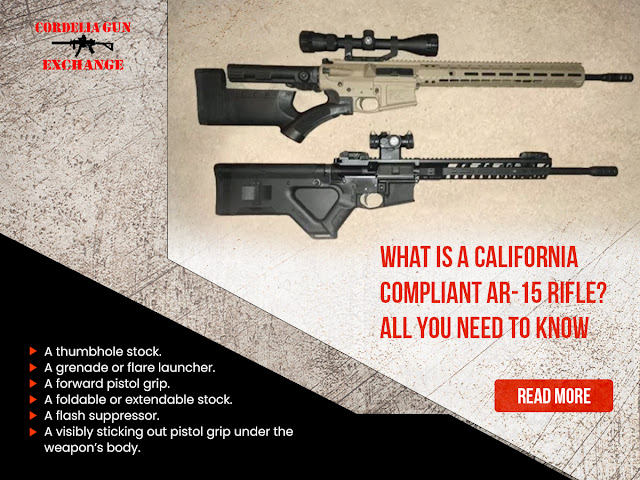
Under California law, certain semiautomatic centerfire rifles with detachable magazines are restricted when they have specified characteristics, including a conspicuously protruding pistol grip, a folding or telescoping stock, a flash suppressor, or a forward pistol grip. Fixed-magazine rifles are subject to separate restrictions, including a limit concerning magazines capable of accepting more than ten rounds.
When evaluating a California-market rifle, consider:
Whether the exact configuration is lawful for sale and possession.
The magazine arrangement and included magazine capacity.
The stock, grip, and muzzle-device configuration.
Applicable state and federal requirements.
A product labeled California-compliant should not be assumed legal in every circumstance. Confirm the current configuration with a licensed California firearm dealer and consult the California Department of Justice for applicable rules.
Barrel, Handguard, and Receiver Design
The barrel, handguard, and receivers are central elements of the DDM4 V7's construction.
Its standard 16-inch cold hammer-forged barrel is designed for durability. Cold hammer forging is a manufacturing process that shapes the barrel through mechanical force. The precise barrel finish and other specifications should be verified for the particular version being considered.
The free-floating handguard attaches to the rifle without resting directly on the barrel along its length. This design can help reduce external pressure on the barrel, although actual accuracy depends on the complete firearm, ammunition, and other conditions.
The upper and lower receivers are commonly manufactured from 7075-T6 aluminum, an alloy used in many firearm components because of its strength-to-weight characteristics.
Together, these design choices give the DDM4 V7 its recognizable profile while balancing structural considerations and overall weight.
Build Quality and Performance
Build quality depends on material selection, manufacturing consistency, component fit, and quality control. Daniel Defense's use of forged barrel construction and aluminum receivers reflects established manufacturing practices in the AR-platform market.
However, no manufacturer or material can guarantee identical performance across every rifle. Accuracy and function can vary with ammunition, maintenance, component condition, and individual production differences.
When assessing a product, look for clear documentation of its components, warranty coverage, and manufacturer support. Independent reviews can provide additional context, but individual experiences should not be treated as universal results.
A careful comparison of specifications and verified product information provides a stronger basis for evaluation than brand reputation alone.
Ergonomics and Handling
The DDM4 V7 follows the familiar AR-pattern layout, with an upper receiver, lower receiver, pistol grip, stock, and handguard. Its free-floating handguard provides a modern exterior design and compatibility with appropriate M-LOK accessories.
Ergonomics depend on the individual configuration and the user's physical requirements. Stock design, overall weight, balance, and grip shape all affect comfort during lawful sporting use.
California-market versions may have different furniture or other components from standard models. Consequently, photographs of the standard rifle may not accurately represent the exact product being sold.
Review the listing's images and specifications together to understand which components are included.
Maintenance and Legal Considerations
Regular maintenance helps preserve a firearm's condition and supports safe ownership. Always follow the manufacturer's manual and ensure the firearm is unloaded before carrying out routine inspection or cleaning.
General maintenance considerations include:
Inspecting components for visible damage or unusual wear.
Cleaning and lubricating according to manufacturer guidance.
Storing the firearm securely and preventing unauthorized access.
Using only ammunition specified as compatible by the manufacturer.
Seeking qualified service when a component requires repair.
California laws can also affect purchasing, transfer, transportation, storage, and permitted firearm configurations. The state's official Department of Justice resources provide information about assault-weapon definitions and other firearm requirements.
Because laws and product configurations can change, verify current requirements before purchasing or modifying a firearm.
Final Thoughts
The Daniel Defense DDM4 V7 combines a recognizable AR-platform design with aluminum receivers, a cold hammer-forged barrel, and a free-floating handguard. Its California-market versions require additional attention to configuration and applicable firearm laws.
When comparing options, verify the exact product specifications, included components, magazine arrangement, and legal status rather than relying on the model name alone. Understanding these details provides a more informed starting point for evaluating the rifle's construction, features, and suitability for lawful sporting use.


Comments
Post a Comment